Tattoo Removal for Dark Skin: Safety, Results, Risks, and What to Expect
Published on
July 22, 2026
Contributors

Elliott Booth
Owner
Have you been quoted three different opinions from three different clinics, and none of them agreed on whether your skin tone was even suitable for laser treatment?
That's the reality many people face when they start looking into tattoo removal for dark skin.
There's an old assumption floating around, even among some practitioners, that darker skin is just "too risky" to treat properly. Delve into this blog to understand what comes along when you seek tattoo removal for dark skin!
It all began when outdated online advice was written back when technology genuinely couldn't handle melanin-rich skin well.
Older machines struggled to separate tattoo ink from natural pigment, which is exactly where the bad outcomes people still talk about came from. But newer equipment changed the whole game.
Today’s state-of-the-art technology is doing enough for darker skin tones to be treated safely by someone who actually knows what they're doing.
Let’s get started to understand the various aspects of tattoo removal for darker skin tones!
What Makes Tattoo Removal for Dark Skin Different?
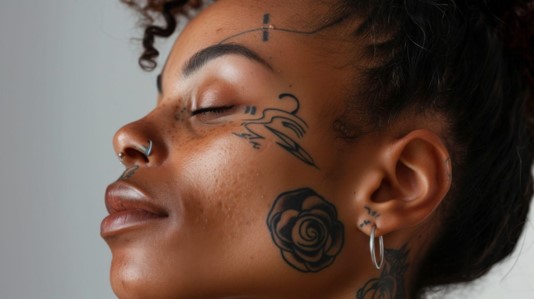
Skin colour comes from melanin, and melanin absorbs light, and so does tattoo ink. That overlap is the whole problem in a nutshell.
Older Q-switched lasers operating at shorter wavelengths would sometimes target both the ink and the surrounding melanin at once.
The result could be patches of skin that turn lighter or darker than the surrounding area, sometimes permanently.
It's a legitimate risk, and anyone telling you otherwise isn't being straight with you.
What's changed is the laser itself. Longer-wavelength Nd: YAG lasers are much better at targeting only the ink and bypassing the surrounding melanin.
This doesn't remove the risk entirely; nothing in medicine or cosmetic treatment is zero risk, but it brings it down to a level that's genuinely manageable with the right settings and the right hands.
Before any of that matters, though, a proper clinic assesses a few things first. These aren't optional extras; they're the difference between a treatment plan and a guess:
- Fitzpatrick skin type, which is basically a scale that predicts how your skin reacts to light-based treatment
- What colours are in the tattoo and how densely the ink was applied
- Age of the tattoo and where on the body it sits
- Any personal or family history of keloid scarring
- What you're actually hoping to achieve, whether that's a full fade or complete removal
If someone skips straight to firing the laser without going through this, walk away.
Laser Tattoo Removal for Dark Skin: The Actual Process
The first appointment usually isn't even the removal itself. It's a consultation, sometimes with a small test patch on an inconspicuous part of the tattoo to see how the skin responds before committing to the whole thing.
Skipping this step to save time is one of the more common corners cut in this industry, and it's a bad one to cut.
Once treatment starts, the laser fires short pulses of energy that shatter the ink into smaller particles.
Your lymphatic system then does the actual work of clearing those particles out over the following weeks.
The laser doesn't remove the tattoo; your own body does; the laser just breaks things down enough for that to happen.
Nobody gets this done in a single visit, no matter what an ad might imply.
Most tattoos take somewhere between six and ten sessions, spaced several weeks apart.
For darker skin specifically, some practitioners will stretch those gaps out a little longer than usual, giving the skin more time to settle and reducing the chance of overworking the melanin in that area.
What happens during the session?
A session typically goes something like this. Numbing cream or a cooling device beforehand, then the laser passes over the area in bursts that people usually describe as feeling like a rubber band snap.
The skin often frosts white for a few minutes right after, then settles into some redness or mild swelling that fades within a day or two.
Sun exposure before and after each session matters more than people expect, and this is doubly true for melanin-rich skin, so a clinic that doesn't bring this up unprompted probably isn't being thorough enough.
Is Safe Tattoo Removal for Dark Skin Actually Achievable?
Yes, but it depends almost entirely on who's running the machine. This isn't really a technology question anymore, but a training and experience question.
A practitioner who's treated hundreds of dark-skinned clients is going to make very different calls on laser settings than someone who's mostly worked on lighter skin tones and is just applying the same approach across the board.
How can you tell if a practitioner is proficient at handling dark-skin tattoo removal? The answer is simple! Directly ask how many clients with darker skin tones they have treated, what laser they are actually using, and whether they show you real results on skin similar to yours.
A practitioner who knows their craft won't dodge these questions. They'll usually want to answer them, because it's the kind of thing that builds trust before you've even sat in the chair.
None of this eliminates risk completely. Temporary changes in pigmentation, occasional blistering, or slower fading than you'd hoped are still possible, even with good care.
Bottom Line
Laser tattoo removal for dark skin has come a long way, and safe tattoo removal today comes down to equipment, training, and a practitioner who actually asks the right questions before turning anything on.
For anyone looking for tattoo removal in Brisbane, Tattoo Removal Australia is the team you can rely upon.
At Tattoo Removal Australia, we have run over 50,000 treatments across Brisbane and the Gold Coast, and that kind of volume tends to show in how carefully a clinic handles the harder cases.
You can check out our process and book a consultation by filling out the simple form given on our website.
Get in touch with us to know about our laser tattoo removal for dark skin.
FAQs on Tattoo Removal For Dark Skin
Is laser tattoo removal safe for darker skin tones?
Yes, when it's done with the right laser and by someone who actually knows how to adjust settings for melanin-rich skin.
How many sessions will I need?
Most people need somewhere between six and ten sessions, spaced several weeks apart.
That range depends on the size of the tattoo, how much ink is packed into it, and how your individual skin responds.
Will laser tattoo removal leave scars or discolouration on dark skin?
It can, but usually only when the wrong laser or settings are used, or when aftercare instructions get ignored. This is exactly why the Fitzpatrick assessment and test patch matter so much before treatment even starts.
Does tattoo removal hurt more on darker skin?
Not really; pain levels tend to come down to individual tolerance and where the tattoo is on your body rather than skin tone itself.
How do I know if a clinic is actually experienced with dark skin?
Ask them directly, and pay attention to how they answer. A practitioner who's genuinely done the work will happily talk you through the laser they use, show you real results on skin like yours, and explain their approach without hesitation